Painting Diary

Diary

REVIEWS, CONVERSATIONS & INTERVIEWS FROM OUR EDITORS


Reversed perspective:
Doug Roberts reflects on his close friendship with David Hockney

by

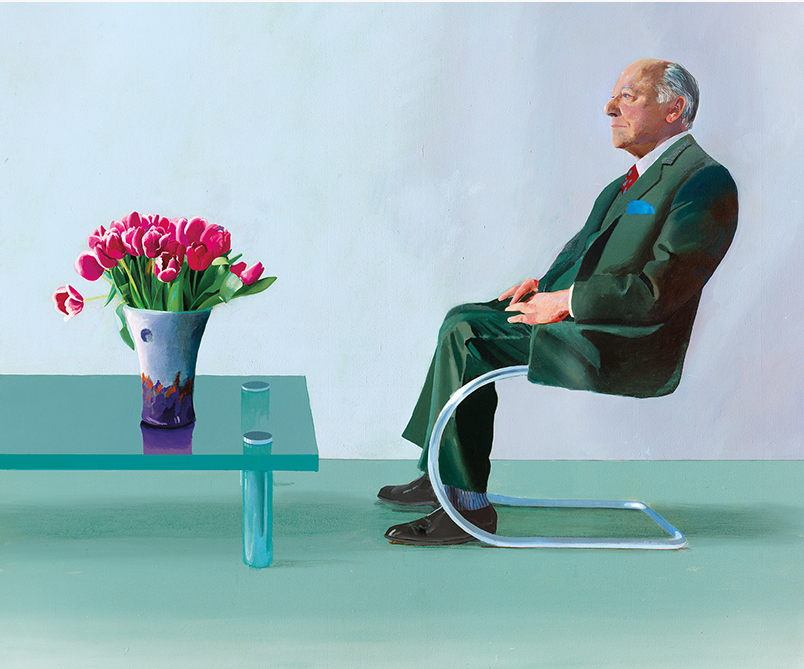
David Hockney, Portrait of Sir David Webster, 1971, acrylic on canvas, 57 × 72 in. © David Hockney / Tyler Graphics Ltd.

David Hockney, Portrait of Sir David Webster, 1971, acrylic on canvas, 57 × 72 in. © David Hockney / Tyler Graphics Ltd.

Our latest Diary entry comes from our lead writer, Clare Gemima. Six days after David Hockney’s death in June 2026, Clare spoke by phone with Los Angeles art dealer Doug Roberts, Hockney’s friend of more than four decades and a sitter in his 82 Portraits and 1 Still-life series.

“Most people see a rectangle with two corners removed. David saw a rectangle with two corners added.”

During this conversation Roberts takes us on a journey from the photographic collages of the 1980s to the six-cornered canvases and digital drawings of Hockney’s Los Angeles studio. Roberts also recalls Hockney’s early years as an openly gay artist and the only commission he ever accepted. Finally, he considers what Hockney’s passing means for his market and legacy.


In Conversation with Andrej Dúbravský

by

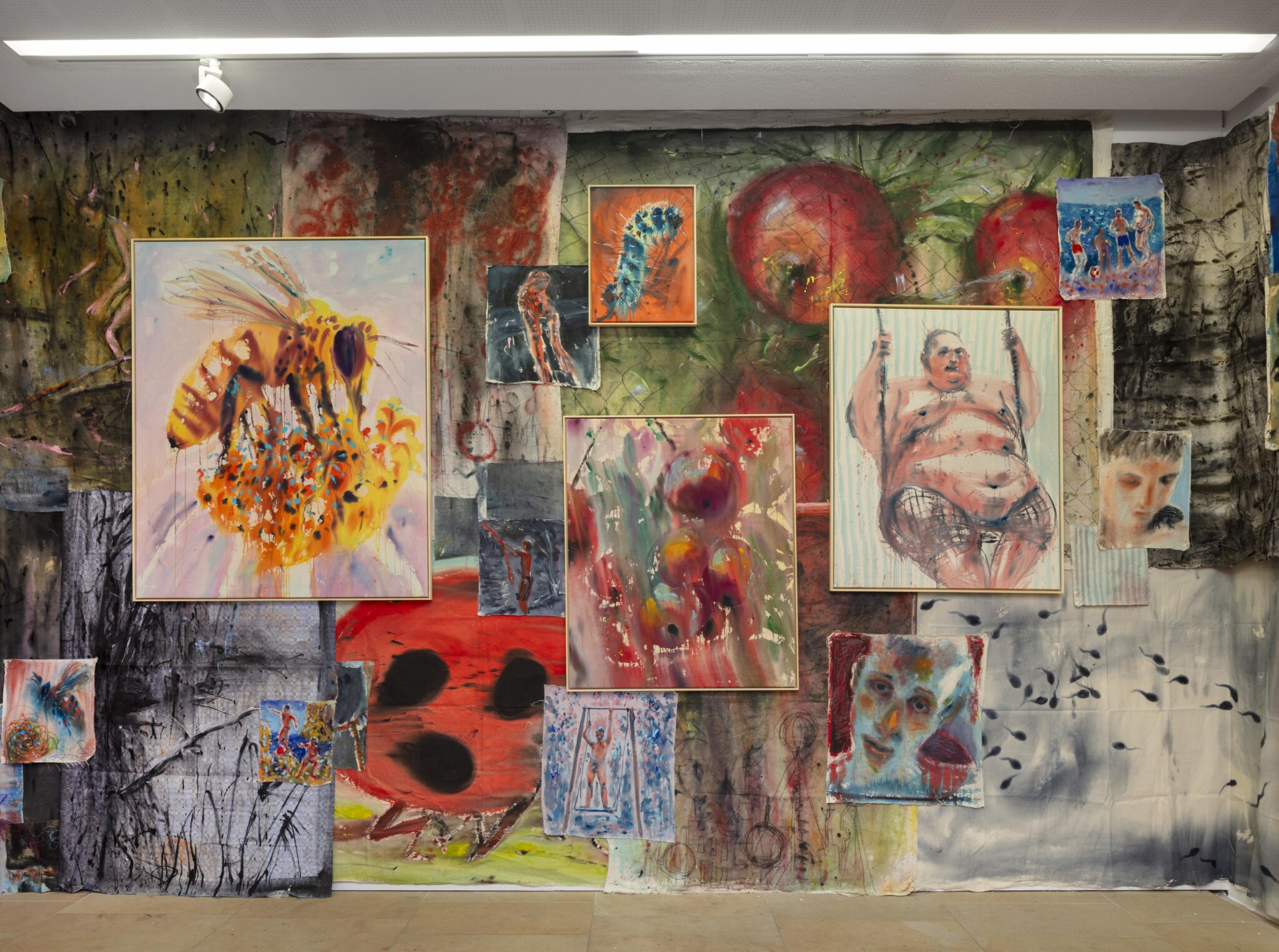
Andrej Dúbravský, installation view of Protest of Peculiars at Kunstpalais, Erlangen, November 29, 2025–February 22, 2026. Photo courtesy of the artist.

Andrej Dúbravský, installation view of Protest of Peculiars at Kunstpalais, Erlangen, November 29, 2025–February 22, 2026. Photo courtesy of the artist.

Our latest Diary entry comes from Clare Gemima, who began 2026 as a writer-in-residence at Painting Diary, Vienna. During the residency Clare travelled to Bratislava to visit the studio of Andrej Dúbravský. This entry is an extended conversation between the two that took place during that visit.

“I just come to the studio every day and work on my paintings until I can’t anymore. That’s my protest.”

During this conversation Dúbravský reflects on painting as a form of field research, the relationship between eroticism and visibility, insects as models of resistance, institutional reception in Slovakia, and the new peculiarities he’s discovered from returning to familiar imagery over and over again.


Sherman Mern Tat Sam: Criticism as a form of activism

by

For our first entry of 2026, we lead with the first in a series of collaborations between Painting Diary and Art & Market, a publication platform that seeks to highlight artistic voices from Southeast Asia. The piece is a conversation between Art & Market’s Editor Ian Tee, and artist and critic Sherman Mern Tat Sam. It was originally published in late 2023 but has been re-edited and extended to touch upon Sherman's recent undertakings to the present.

“As you may or may not know, I am a very slow painter. Things can take years to come to fruition. So I do not speak about the work in terms of projects or even groupings. Things overlap, ideas seep from one work to another.”

This interview recounts a broader history of Sherman’s practice and what it means to be a painter in a holistic sense. It recounts a process of continuously pulling from one’s life journeys and charts a continual conversation between people, places, and the inter-generational changing of the zeitgeist, spanning months and years and decades.

Nancy Shaver, Sherman Sam, Duet exhibition view, MAMOTH, London, 2024

Nancy Shaver, Sherman Sam, 2024. Duet exhibition view. MAMOTH, London. Courtesy of the artists and MAMOTH, London, UK. Image by Damian Griffiths.

Long-Form

LATEST LONG-FORM SELECTED BY OUR EDITORS


Abandoning the slop in favour of Stairing

by

Our Long-Form section is dedicated to exploring current approaches to painting. Alongside some of our favorite writers, we also seek to publish written output from painters writing about painting. We want to highlight the breadth of invention and play that can come about when painters translate their voices into textual form.

“Looking up and moving towards the unknown is not something that comes naturally to the human psyche. Being asked to raise our heads above the parapet takes noble bravery, whether on a micro or macro scale.”

Our first Long-Form entry of 2026 comes from London-based writer Issey Scott, who explores a pair of recent London exhibitions featuring the paintings of Basil Beattie and Tala Madani. In “Abandoning the slop in favour of Stairing”, Scott asserts the act of “looking up” as a tool to move forward through painting, and also change the way we might choose to look at the world and our relationship towards it. By taking oneself outside of one’s own body Scott frames these approaches as a brave and hopeful way of elevating ourselves from the hardship created through inaction; and to be part of a change for the better.

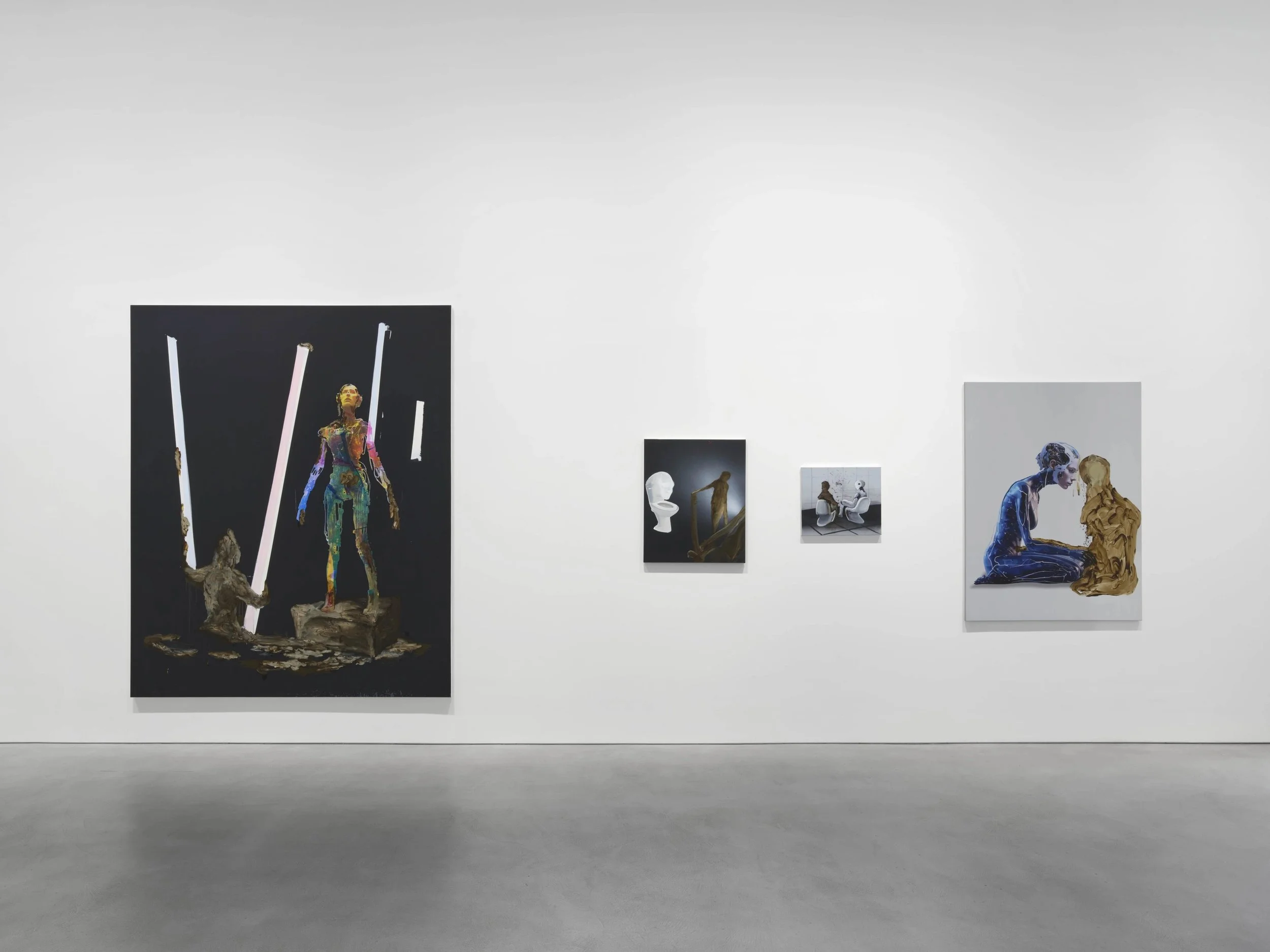
Tala Madani, Daughter B.W.A.S.M, 2026, installation view. Courtesy the artist and Pilar Corrias, London.

Tala Madani, Daughter B.W.A.S.M, 2026, installation view. Courtesy the artist and Pilar Corrias, London.

Residency

OUR CURRENT ARTIST / WRITER IN RESIDENCE


Chris

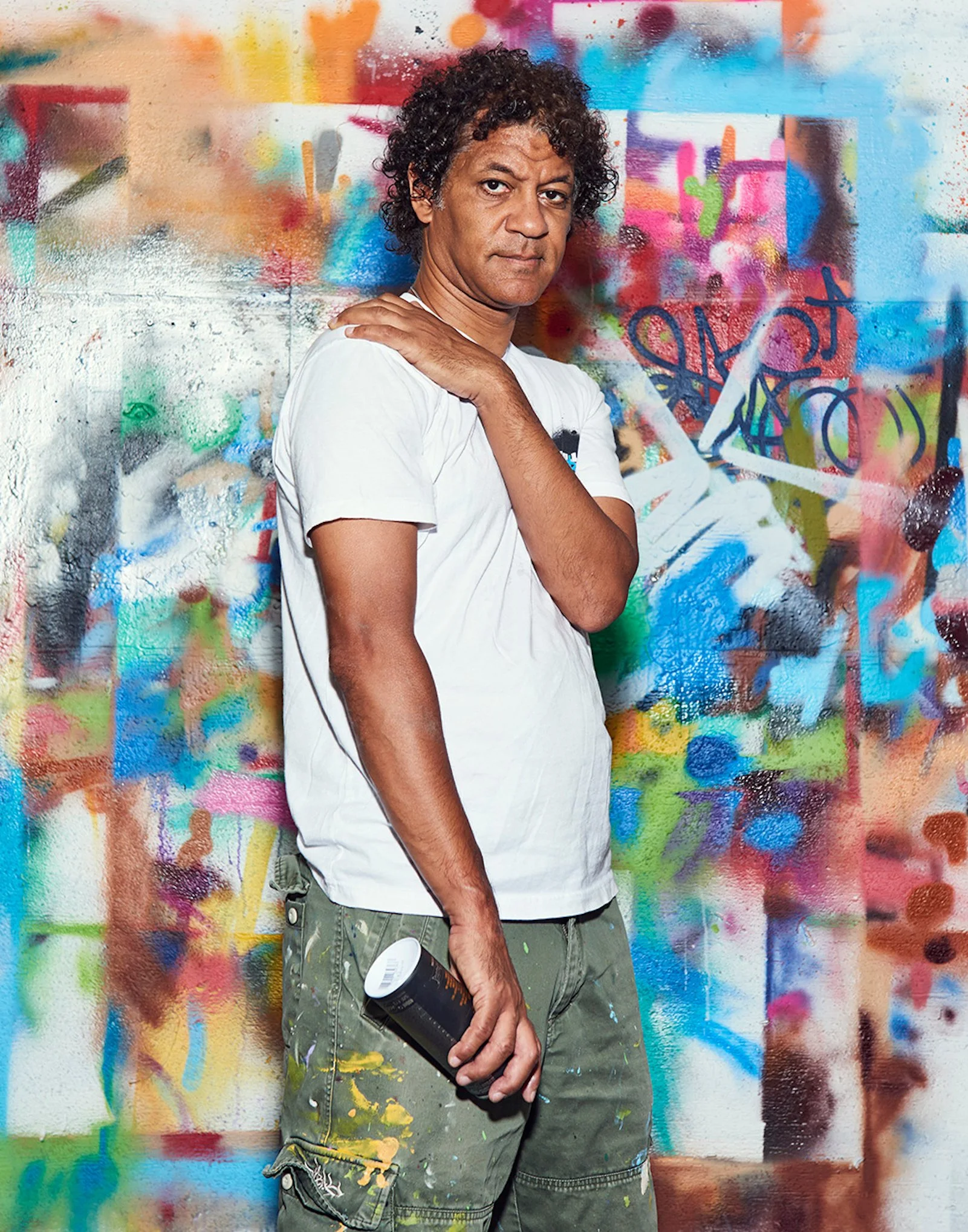
Chris “Daze” Ellis portrait image. Photo by Kyle Dorosz.

Chris "Daze" Ellis

Our current artist in residence *Chris “Daze” Ellis*, a hugely influential figure in the New York art scene whose career has spanned more than four decades. Daze emerged from the 1970s graffiti movement and the creative energy of New York’s downtown club scene. Transitioning from tagging trains to spray painting canvas in the early 1980s, he developed a studio practice that merges urban realism with gestural abstraction.

During his Painting Diary residency in Vienna, Daze intends to experiment with denim as a substrate, combined with mixed media including bleach, pastel, and acrylic. These works will expand upon recent movements within his practice, merging fluid abstraction with representational imagery drawn from both urban and natural environments.

Daze (New York, b. 1962) has held solo exhibitions at institutions including Fashion Moda (Bronx), Palais Liechtenstein (Feldkirch), Musée d’Art Moderne et d’Art Contemporain (Nice), and the Museum of the City of New York. His work has appeared in major group exhibitions at MoMA PS1, the Stedelijk Museum, the New Museum, and MOCA Los Angeles, among others.

You can read more about Daze’'s practice and the residency program here.